`

Showing posts with label Dialogue. Show all posts

Friday, August 09, 2013

In a Thread Regarding Perception of Feminism and Feminists

There was a post on the /r/feminisms subreddit linking to an article by Noah Berlatsky featured on Slate.com about the role of men/males in feminist issues, and that specifically feminism is something which benefits both sexes(there is also a brief aside regarding a pews metaphor which I liked as well).  The commentary, itself, is alright(albeit rather short) and does make some points which I'll try to address at another time, though my interest for this post is in responding to a comment on the reddit submission page.  To see the rest of the comments on the submission, click on the first link in this paragraph.  My thoughts are in a thread of the following:

User flamesflight commented, "I think feminism has done a poor job conveying that patriarchy is harmful to men and children as well."

Hamiltonica replied, "I think the media representation of feminism has done a poor job of that."

flamesflight responded, "It is not the "media's" responsibility to clearly communicate our message. It is up to us to utilize the media available to do so."

To which outwrangle stated, "Well when the media systematically silences feminist voices and shuts us out of the public discourse... yeah, I'd say the media is responsible somewhat."

My response is pasted below with a minor edit, 'It's' changed to 'This is' in the latter portion.

"I'd say it's part of the heterogeneous makeup of why this misconception is held. There are certainly outlets which have a vested interest in misrepresenting what feminist issues are, what a feminist is, what their values are, etc. Let's say that Talk Radio generally as well as Fox News might fit this bill. However, there are also others who either are trying to do the 'just the facts' job or those who are even advocates for feminist issues. Let's say that's NPR and MSNBC for the sake of an idealized argument (I recognize both outlets certainly have history and current hosts who might bely this broad stroke).

The feminists who are seen/heard on hostile outlets like Talk Radio and Fox News are generally fewer and further between, as its not their audience's perspective and in fact many are predisposed to being anti-feminist so the more effectively a feminist can be caricatured as some sort of proto-matriarchal amazonian beast creature, the better. On NPR and MSNBC those who will be seen and heard are going to be the spokespeople or leaders of the prominent and powerful organizations which are dedicated to the cause. Generally speaking the leaders of these institutions are going to be in these positions because of some kind of perceived ability on the part of those people that make up the organization. While that might be a haphazard way of putting it, I'll try to rephrase and say the people that are the leaders of advocacy groups are those liked most by people self-identifying and participating in these groups, and therefore the leaders are going to be best suited to speaking to like-minded individuals, elsewise they're not going to be in a positions of authority on the topic.

Why this matters in my opinion (and this extends beyond feminist issues and is more directly an issue having to do with hyperpluralizaion in society, more visibility due to modern media, as well as our diminishing ability to communicate meaningfully when more and more of our lives is involved in pursuits which don't involve interaction with other people or is long distance and anonymized) is that say I'm an honestly confused person wanting to be better educated on feminism and those people who support it. Also there is no internet to look the stuff up on(since it's a relatively recent advent and many consumers of news media of any ideology don't bother to do the digging, themselves). There's either these people over here telling me feminists are anti-male nazis and their examples are the shrill freakouts allowed on the air, there's this other group that says they're legitimate and the people they bring on don't really speak to me or to others not on-board with the cause already, and there's this other group that says feminism is more critically needed than ever before and the feminists they highlight seem to take the opinion that anyone not supporting feminist causes has got to be a consciously complicit member of the patriarchal society and the the cause.

This is an environment where public discourse is present, and feminists are in fact being recognized but it's so fragmented there's not a true 'public' discourse so much as catered private discourses that inflame their respective audiences to distrust even engaging with 'the others' which is in my opinion part of the engagement in discourse in the first place."


I attempt to bring the topic around to an issue which I've been working on as part of the group of posts Intellectuals, Elitists and Public Discourse, which is the 'purpose' of public discourse.  This is not to demean women's issues; rather, I think no matter how important or mundane the topic of discussion being engaged in, we who are invested in seeing our perspective be taken onboard by others both apathetic and critical of our opinions owe it to the seriousness of the topic, the time we spend considering these things and to the intelligence and humanity of those we're attempting to convince to consider the manner in which we discuss these things to mitigate unfair and inaccurate portrayals of those views as well as to 'speak to' uncertain or antagonistic factions such that there is a real grasp of what the actual positions and true principles we hold are.

As always, I solicit for the perspectives of any who read this and consider it worthwhile to respond.

Thursday, June 07, 2012

On the Use of Slurs and Offensive Terminology

From this Google+ post by Kristen Strater.

Recently a tweet by Gwyneth Paltrow caused some level of controversy in the news because of her choice of words, and Kristen shared this piece by Billy Johnson Jr., to which myself and a variety of others replied.  I recommend reading the post, especially the comments by Darryl Barnes, Chuck Buford,  and Holden Caulfield, though as the purpose of this site is primarily for voicing my perspective on things, I'll only include here the thoughts I had on the matter.


Many of the alternate spellings and uses of the original slur derive from earlier use by African Americans in rap or comedy or other media, either consciously or unconsciously reclaiming the word somewhat from it's racist earlier use. That said, these uses of the word were nearly exclusively made by those who the epithet was originally used to insult and denigrate, and it is certainly used by some still for its original meaning.

In the end, I tend to believe it's important to be able to speak our minds freely and to have a wide variety of words to do so. It is not necessary to use historically hurtful words which don't really serve to convey any more meaning to a thought than had it been made without the word, so regardless of the shifting meaning behind a word in the now, there's no harm in simply considering my choice of words or phrasing of an idea so as to not offend listeners or readers. I'm not talking or writing just to shout into the ether; I want to be heard, understood, and engaged with. Offending people or ridiculing them reduces the number of those willing to converse with me and that's doing everyone a disservice.


...and later


+Darryl Barnes,I apologize if I came off as addressing something irrelevant, but for what it's worth I don't think I was giving any history lesson. As your exchange with +Chuck Buford shows, there's a lot of difference in opinion on the matter even in this 'modern' age. A couple of questions so that I might better understand your position on it, if you'd indulge me. You said you're not offended by slang variants of the word and have multiple white friends who use the terminology in a friendly and casual way, though for argument's sake if an openly and proudly racist guy called you one of those would it be the same? I may be off the mark though I would assume you'd at the least be uncomfortable with it because you'd have a feeling of what he was implying or intending to get around and still use. On the other hand the actual racist word used in a comedy bit where someone is using just about every other slur for other race and ethnicity imaginable it may be more tolerable because the intent behind the use of it.

In any event, I've no doubt you've a different perspective from myself on this having experienced life in a different pair of shoes, so to speak, and I respect your opinion on the matter. I stand by what I said in the second paragraph of my last comment, which is that the use of the word is not necessary to better convey a message or idea to others and in fact using it will distract from what a person is trying to say because of either offense at its use or because there will inevitably be a crapstorm of meta-discussion about 'should he or she have used the word, ever used the word in any situation, does this mean they're racist, oh they have black friends who say it's okay, blah blah blah.' If someone's wanting to contribute to a conversation, it's not fear of using an offensive word and a suppression of their free speech to avoid using it; it's recognizing its use is at best a distraction to what they are trying to say. This goes for all slurs or offensive terminology as well, not just for one term for one demographic group. (Obviously the caveat is if the conversation is about slurs.)

Kristen Strater I +1'd your comment illustrating the context of this particular story and how I guess the tweet in question is a paraphrased reference to one of the songs off Watch the Throne since I'll admit I didn't initially read much about this particular story. Having read it, I think outrage isn't in order(though titles of songs or movies or books or lyrics or quotes with slurs do present a slightly different issue from simply using the word in one's own parlance) and I don't think there's been as huge an outcry about it nationally as if it wasn't such a tangled situation. To answer your question about anti-racism activism I wouldn't consider myself an activist and I'm not really involved with any groups or movements or done much specific reading on the topic, though I think I've seen a couple of Wise's videos here on the internet. I just enjoy participating in discussions with people and I relish trying to find ways to discuss things considered to be controversial or polarizing in a way that is both enlightening and engaging for people who are interested in the topic.

Friday, May 18, 2012

And Now For Something Completely Different

This entry was originally posted as a comment reply in this submission to the technology subreddit.

Most of the entries I make on here will be devoted to politics or some aspect of culture and, perceptions and communication.  To be fair, many things overlap into those categories, though I also have a sweet spot for things which would broadly described as 'techie'.  The submission this comment appears under mostly had to do with Apple changing Siri's action when asked what the best smartphone is, which I'm mostly indifferent to (barring implications for Apple's and government compulsion to display particular results for various queries that would not give an accurate answer so much as what is deemed an 'appropriate' one).  The comment I replied to from gdstudios went as follows:

"Don't you realize that you are looking at a metaphor for how Apple runs its business? Pretty on the outside, strong and durable as hell, as long as you don't modify anything and play exactly according to our rules.

I will still never understand how the university generation is totally complacent with the fact that buying an iPhone forces you to download and purchase all of your apps, movies, and music from Apple through the unusable bloatware iTunes. Not to mention that it's beyond easy to accidentally erase all the mp3's you currently have on your phone when you upload new music."

While it was mostly directed toward amiability to Apple's DRM and walled-garden, I think average consumers don't consider those things when they hear or read about Apple or the products it makes.  They think of all the things Apple represents, and that's informed by what they see and have heard and read about the company and its employees from its past.  This is my attempt to articulate where people may be coming from on that.

"University generation... I've never heard that term before though there's a response down from you that sort of defines it as millenials which I think I'm just before, having been born in '81. I have an iPhone now though it's because my company opted to go with the device for their provided handsets; I was hoping for an Android-based one for what it's worth.

In any event, I remember growing up and the general story-line was that Apple made the computer something that could be used by people outside of programmers and business type(though I didn't start seeing Macs until I was in middle school and I'd been using some Packard Bell and second hand home-built computers for a few years before that rocking out on Dos with Populous and Death Track and Circuit's Edge. Anyway...) Vile and evil Microsoft and Bill Gates ripped off Apple and succeeded based on the stolen ideas and brought all of the other hardware companies along with them. Apple was in all of my schools growing up, and even very early on I remember the 'just works' mantra though I couldn't for the life of me figure out how only having a single mouse button was useful, and I don't remember seeing desktop computers using CD-caddies except for some Macs we used in computer lab in I think it was junior high. Apple was also bandied about as the computer de jour for anything artistic or music oriented(I've later found that despite having options on Windows and Linux machines, Logic Pro actually is I guess pretty dang good for audio manipulation and creation.)

Anyway, throughout the 90's Apple was the little guy fighting the good fight after it was wronged, and especially the colored jolly-rancher looking iMacs really played to the idea Apple was outside the box on design, even if they weren't that appealing(this was back when most computers I'd seen anyway were the matte off-white that yellowed terribly. Credit where credit's due, I remember seeing some Acer computers back then that were all black or black and grey with swooping lines and aesthetics on the sides of the towers and had a swiss-cheese-ish look to their vents on the sides).

So going forward, all of these people from at least my generation if not all over had grown up seeing Apple depicted as the underdog, occasionally seen their stuff and being a little intrigued but confused by the differences it had compared to the 'normal' computers we'd see, we'd hear about them struggling but surviving, see the awkward but innovative designs. That pretty much takes us through the 90's and in the very early 00's Apple's hardware was still....well quirky I guess? awkward? bizarre some might have and continue to say? That wasn't the first thing to change as OS X dropped and even in its first iteration it was much prettier than Windows ME and even in many areas XP(Vista upped the visual ante for the OS but screwed the pooch on its initial usability and by the time Microsoft had missed the window, as it were, to try to save that version's mindshare) and was just so damn fluid. The buttons all lickable and glossy! You see that dock, man?! It's so much prettier than that stupid Start(task) Bar that actually says start on the button, ain't it? You see those icons! They shrink and zoom as you move over them, holy cow!

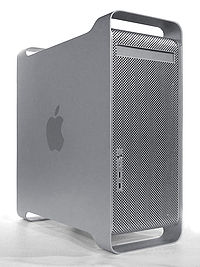
Okay, so OSX made the using of the computer much nicer. Take a look at how Apple took their designs from being artsy to being sharp. Those Powerbook G3s ? Get ridda that junk, we got smooth looking stuff going on here. I mean, look at what they replaced that thing with . Look at how the G4 Power Mac to the G5 Power Mac changed. Holy crap, right? I'm sure somebody'll find an example to slap me in the face with, but seriously those were not incremental changes for at the very least Apple's own lineup, and the iMacs weren't hard on the eyes either. The logo itself on the Apple hardware never again as far as I know has been the multi-colored one; it's white or silver or black. In short, Apple got their act together in the design realm before the vast majority of other hardware manufacturers and became that hot 20-something who used to be pimpled-up and awkward.

So there's that. Since I've already done all this typing, I may as well keep going for the various justifications and rationale that very well could play into random consumer A's perception of Apple and their products. Steve Jobs gets a huge amount of praise for these design changes and, indeed, he does deserve some of it. However, the industrial design may not have begun with him but Jonathan Ive apparently has had a huge amount of influence over the physical appearance of the devices Apple's put out in the aftermath of these early 2000's changes and this is the period of time to which people in media and unknowingly in common usage refer when they lavish over how amazing Apple's products look. On that note, it's my opinion Ive will be the next CEO and Cook's almost more of a place-holder while Ive's grooming is completed.

Back to Steve Jobs. Up until very recently, he was Apple. Woz, who? Steve wasn't the CEO for a decade? wha? If people knew about this history, and to be fair probably more people from the general consumer perspective knew of Apple's corporate makeup than say HP or Sony, it just intensified the myth and legend. Woz designed and made the original company possible but he was quirky and isn't a salesman, a showman, the guy who shows you something, smirks as he looks at you sidelong and you say damn that is pretty smooth. That was Jobs. Plus, the dude was the prodigal son of the company and he came back right when Apple was at its weakest, having needed to take money from Microsoft of all companies to stay afloat and bang, all of a sudden OSX, their physical designs go from meh to heck yeah.

All of that helped, and really made much of Apple's larger devices appealing for more and more and more people actually in college or university; gotta get that glowing logo on the back. So that brings me to what really in my mind what got Apple into people's heads. The iPod, iTunes and letting go of quite so much proprietariness. There were mp3 players before the iPod, of course, but Apple and Jobs' were able to hype theirs so much better, sell it much better, and more crucially than I think is given credit, after a short spell of exclusivity for Macs and Firewire, made the iPod compatible with Windows machines and gave it a USB plug. Lack of a requirement for songs to have been bought from iTunes helped massively as well, letting people bring in their pirated or ripped libraries with them. As things progressed, iTunes gained momentum and became the de facto method of legally obtained music and movies and television shows on the internet. The iPhone didn't even launch with App Store, but it was sexy looking when smart phones until then were anything but(Prada yes and Equilibrium and 13th Floor were great movies but who remembers that in place of The Matrix?). This was also on the tail end of rumor after rumor for how long hyping Apple's foray into the market? Where'd those rumors come from and who consumed them? Favorable and fawning people in media, the younger and 'tech-ier' of which grew up seeing Apple go from weird also-ran to trendsetter. Who(Apple), by the way, turned their handicap of tiny marketshare into a badge of exclusivity and along with changing from IBM to Intel cooled and cheapened their units for their manufacturing so they could begin to make incredible profit margins on devices most others can only dream of or attempt to make up for through marketshare.

The iPhone and iPad and all of the closed garden tight controls and cut-throat tactics be danged. This is crescendo times and even with their idol gone, Apple's got the mindshare in so many ways, in so many areas it could release incremental updates even as others do amazing things and they're still good for years to come.

Thanks for reading that massive block of tripe if you did and for what it's worth, Google's exactly the sort of foil to exist to give Apple something to continue to rage against in the mobile sphere as a relatively humbled Microsoft claws to get something, anything from that market since Windows machine makers are still trying to get their sexy back with the consumer base.

Apple's not bad and the magnetism they has roots that go deeper than just iPhone/Pad sales and App Store metrics."

Thursday, May 17, 2012

An Exchange on Civility

This post is found, in part, on this Republican subreddit entry.


The submission linked to an image which attempts to convey the indignation felt by the Republicans in this forum about arguing or disagreeing with liberals.


Since I'm not one to generally let stuff go without tossing out my thoughts on it, I posted a response which, unfortunately, didn't garner a response from the original poster of the picture.  It did, however, get me a little bit of anger from someone who read previous posts of mine and thought I was being hypocritical.  I'll attempt to do an effective job pasting in the exchange below.


My response to the post:
"For what it's worth, I've been told I'm a liberal though I'm enough of a hipster to dislike being put into any particular ideological brand and prefer to try to think pragmatically.

On that note, I do not hate all Republicans. I do not hate all conservatives, (L)libertarians, minarchists, Democrats, Greens, Constitutionalists or progressives or any other ideological or political affiliation. I would venture to say that I don't hate any of them, nor any individual person.

I hate discord. I hate apathy, antipathy, presumptions of malevolence and distinctions so bold and bifurcated that there is only right and wrong. Our method of government is one of those which puts on high the idea that we can discuss and, via rhetoric and not might, come to solutions for the real world problems we must face. Because there are supporters and people who believe in a particular policy, that therefore makes it a viable policy prescription, whether it be a federation of near-independent states or a massive federal arm with satellite states holding little power. Our government is what we make of it and the brass tacks is how we discuss the matters with one another and how we motivate the supporters for various positions to demonstrate their will in the political system.

I suppose that makes me, in some ways, a filthy free love hippie because I think civil discourse is preferable over polemic, and that no problem is one that we shouldn't approach in this way. I don't think it's a utopia for that to be the standard, as it's demonstrably obvious that it can be frustrating, grating and painful to have to endure the slowness and unpredictability that having free and open discussions in our society necessitates. Moreover, those who disagree with me are still my brothers and sisters in this nation, and that at most means we are adversaries. At worst we are opponents on a field that we both not only must, but should because we all were and are created as equals. You and I both have a vested interest in seeing our neighborhoods, cities, counties, states, regions and country do well.

For that I thank you and I will always make the best attempts to assume good intentions on the part of those who disagree with me, though I am significantly less than perfect in that regard."


User GeneralPudding responded with the following:

" I suppose that makes me, in some ways, a filthy free love hippie because I think civil discourse is preferable over polemic, and that no problem is one that we shouldn't approach in this way.

That's funny coming from a guy who, not just 5 days ago, wrote this:


We don't need to play their market games with boycotts to defeat the opinion and outlook of a person like Limbaugh. We don't need to actively splinter and divide his audience and constituency the way he does ours with fear, uncertainty and doubt. We don't need to compete. That's their values and tactics and methods. We can go on his turf, play by his rules, with half our brain tied behind our back and still win in rhetorical sport. Because we really are the ones that are right, and it's a matter of putting it in words and values and principles more people can understand and relate to.

so yeah, you like "civil discourse" and "free and open discussions", except when it's from talk radio conservatives like Limbaugh, Beck, Hannity...."


The linked comment Pudding is quoting is from one I made regarding my opinion that while boycotts can be effective in some instances for affecting change, the outcry and subsequent advertiser pullouts from Rush Limbaugh's show in the aftermath of his fiendish remarks on Sandra Fluke would not ultimately be positive because they would only last as long as public attention was on the matter(which time seems to have borne out as true since advertisers have begun returning to his program) and more importantly, Limbaugh's listeners would perceive the boycott as an attack on conservatism, his rights and an insult to all of their opinions on women, regardless of whether these things are true or intended.  That comment is quoted entirely in the Boycotting Ideological Leaders post just put up a few moments ago.

In any event, I responded as follows:

"Ya know you're absolutely correct, I probably do engage in hyperbolic language and it's something I must try to keep in check. I try to account for my tendency to be 'overly passionate' or my screeds with such portions of my post as this, which you neglected to quote.

For that I thank you and I will always make the best attempts to assume good intentions on the part of those who disagree with me, though I am significantly less than perfect in that regard.(emphasis mine)

If it pleases you, GeneralPudding, I will explain my verbiage and I honestly don't think there's anything wrong or even offensive with what I said. However, if I was unfair or stereotyping with what I said, do point out my hypocrisies or contradictions so that I may learn from my generalizations.

First, for those who didn't click the link for whatever reason(or read my rather lengthy rambling, since I do tend to do that), the quoted portion of my post comes from a dissenting post in /r/politics regarding the boycott of Rush Limbaugh's advertisers. To summarize, I don't think a boycott of Proflowers/Carbonite/Legalzoom/Any-other-advertiser is the appropriate way to address Limbaugh's influence on the conservative dialogue, or via that, the Republican party and its priorities in our country.

From my perspective, it is admitting defeat in the rhetorical play-field which is our ongoing and perpetual national political discussion to resort to a boycott. I've met many a liberal/progressive who feel it's not even worth it to call into Limbaugh(/Hannity/Levin/Beck/Ingraham/Miller/I'm sure in this sub many of you have favorites and less-favored political commentators which you like or dislike for your own individual reasons) because 'the game is rigged' due to it being a conservative-run program which often does advertise for organizations such as Hillsdale College or the Heritage Foundation or other similarly minded outfits.

I say bullshit, and if 'we' are right, and by we I mean liberals/progressives/environmentalists/feminists/Democrats (again, I realize some of these broad groups do overlap with libertarians/conservationalists/conseratives/Republicans depending on a particular issue, but I am grossly generalizing for the sake of my ongoing rantble), then 'we' ought be able to find someone amongst our ilk which can operate on a level to 'hang with' those talented and high-paid personalities on the radio.

Sure, we've our own programs such as The Daily Show or Colbert Report, but those programs aren't watched by conservatives or Republicans the way they are liberals or Democrats(just like most libs or Dems don't actually listen to Limbaugh/Hannity/O'Reilly but will observe the soundbites of the programs and will be utterly, totally, shocked by what they hear) and therefore the only way our ideological leaders(which aren't even our political leaders on either side, mind-blowingly) don't have much to do with one another aside from their respective listeners arguing around the water cooler, dinner table or construction site.

Instead(and here's where I finally start breaking down my comment quoted by GeneralPudding), we ought to demonstrate those values we are sometimes lampooned for in our approach to 'playing the very serious game and sport' of politics:


We don't need to play their market games with boycotts to defeat the opinion and outlook of a person like Limbaugh

Liberals don't need to, and really shouldn't, utilize the free market to express their contempt for the opinion and outlook of Rush Limbaugh. I realize I sort of addressed this point in an earlier paragraph. No, I'm not going to go back and edit my post because....just because I'm on a riff here, dammit.

We don't need to actively splinter and divide his audience and constituency the way he does ours with fear, uncertainty and doubt.

My personal opinion is that Limbaugh and other public figures of conservative media apply an all-too-combative tone to their rhetoric which is perfectly fine when it comes to discussing matters relating to people or organizations which are outside our own political environment. But when talking about things with our fellow citizenry? I think it's at the least poor form to practice such caricatures of liberals as malevolent forces seeking to do harm to others. But it's profitable via drawing many listeners, and more importantly, he and others on the air do absolutely make very strong arguments which listeners can then use in their daily discussions with liberal friends/coworkers/etc. *See the linked post for more on that point.

That's their values and tactics and methods. We can go on his turf, play by his rules, with half our brain tied behind our back and still win in rhetorical sport. Because we really are the ones that are right, and it's a matter of putting it in words and values and principles more people can understand and relate to.

This refers to, again, the polemic and pretty obvious(in my view) demonization of liberals on these programs which serves little for constructive public discourse of very important issues. I think it's just as unproductive as it is for Bill Maher, Rachel Maddow or Keith Olbermann to smirk and say conservatives are stupid or heartless or malevolent for holding the views or positions on policy that they do.

Now to be sure, I'm sure there can be other quotes by me which can be found which belie my intent and positions. Read my various comments and I'm confident that you'll come away with an impression which is not that which is given by a selective quote, as many people like to say, 'taken out of context'.

Thanks for reading all of this if you did!"


Doubly so for anyone getting through all of that, and while I have yet to post the reason I feel the need to have a blog specifically for my own views on matters and views on the ways others in public express their views about not just issue but one another, it's probably becoming apparent that when it comes to having an opinion, I'm rather open to differing perspectives so long as a tenant of that perspective isn't to assume all those disagreeing are stupid or evil and must be conquered and scattered.

Tuesday, May 15, 2012

Calling In

A few years back I resolved to begin attempting to make my views and perspectives more visible beyond the friends and family I speak with on a semi-regular basis.  This (we)blog is a part of that, actually, but calling into programs with big personalities talking about current events with strong opinions was and remains my prime interest.   My 30th birthday soon became the dash in the sand which would be when I did it.  I decided to call into my local talk radio station last year(2011), specifically to the Mark Davis Show.  He has occasionally stood in for Rush Limbaugh, and I personally find his style to be much better than Limbaugh or Sean Hannity or just about any other of the big names in conservative talk radio.  I've intended on calling into his or other programs since then, as I prefer the style most talk radio shows have for debating even if I consider the way in which the hosts and callers put on the air use this style for mostly inflammatory and unproductive ends as far as public discourse on current events goes.  Unfortunately, I've been consumed with work as of late and it's made even listening to the programs very difficult, much less being able to call in and give the proper amount of attention and care to the endeavor.  I don't think it serves the host, their audience, or myself well if I were to call in and be fumbling for words, distracted or frustrated because of some unrelated thing going on.

Anyway, as you'll hear I called in without much direction on what I wanted to speak about, though I recall there was much going on with Herman Cain at this point during the Republican primaries.  I honestly would have enjoyed talking about just about anything and am just eager to have an exchange of ideas with others and better understand their perspectives on it.  I'm not big on attempting to judge others for their opinions but I do think it's important to understand how a person arrived at their opinion and also to do whatever is possible to take the position and ponder its implications, both intended and unintended.  In a near-future post I intend on going into more detail about this and how things could be improved, arrogant as it is to presume I could improve upon models which move millions of dollars a year.

Getting back to the conversation I had with Mark, I really enjoyed my interaction with him and I admit I was pleasantly surprised I didn't get too wound up nor did I offend or upset the host.  I'll let the audio of the call in this embedded video speak for itself, though.  I apologize for Mark's portion of the conversation being muted in comparison to my own as I did the recording with my computer;  I wasn't sure if I would be able to find my call in his podcast and then crop it out.  In the future any call-ins I'll be doing I'll do a better job balancing volumes.


Let me know what you think of the conversation we had and what points you think we missed or glazed over.  Thanks very much for reading and listening and using your time here.

Wednesday, May 09, 2012

Online Anonymity

Posted originally to Lord Blizzard's Google+ post.

     As near as I can tell there are at least two major perspectives of anonymity on the internet. Neither, as far as I know, really predate the other but at different times they've served a productive purpose. I'm not going to attempt to create a timeline, but clearly at the nascence of ARPANET the idea of anonymity for such a purpose was not practicable, if discussed much at all.

     Anyway, on one side there are the proponents of a anonymized internet. They'll point to the freedom this engenders, the openness of sharing information and ideas in a way that might not otherwise be possible in the physical world due to fear of repercussions or cultural stigma. Consider, as an example, posts on a site such as reddit with the leading phrase 'Get your throwaways ready..'. If a networking site allows for accounts which are not linked to a specific, real-world identity, it can encourage a greater participation in discourse because people have little to worry about in regard to consequences for the things they may say.

     On the other(another?) side, there is the idea that total anonymity on the internet is both a pipe dream as well as immature or poor implementation of a system because total anonymity can encourage irresponsible behavior on the internet and it is much less reliable for data mining for advertising purposes, something which the modern internet is highly dependent upon.
It's a pipe dream because there are any number of ways, even without a Google+ profile requirement, that an individual can be tracked down on the internet based on their activity.

     It can encourage irresponsible behavior such as malicious bullying and trolling when a person feels impunity to act however they like, regardless the harmful consequences(what's called in pop media cyber bullying).
It's much less reliable for data mining for advertising purposes because comparably speaking Lord Blizzard living on Naboo who has two kids, a wife and an apprentice is much more of a concrete item to utilize in good targeted advertising than +Lord Blizzard of who knows where doing who knows what about who knows where and who and whatever(I realize from looking at your about: page you do give information about your real-world location so you don't fall into these cookie-cut extremes).

     As much as we might like for the internet to remain free as in speech and open and free as in beer all while maintaining total anonymity, massive server farms cannot at this time pay for themselves and the paradigm the internet is in right now is that of advertising, and the better the goes-ins for generating targeting ads the better the goes-outs. Google is, if not a hub for this kind of activity and commerce, the epicenter for it. In that vein, we'd do well to remember the 800 pound gorilla that Google is competing with in the social networking realm, Facebook. Their current value(when they go public) is based entirely around this premise that they have much more intimate information for their users than, say, Google does. It's entirely understandable, if not condonable, that Google would be seeking to correlate the massive data they already have with much more specific, real-world identities. I can sympathize that Google could and perhaps should seek the 'higher' ground with being more permissive about pseudonyms so we as a global society can have as much of an open discussion of all items as possible, but I do not begrudge them one bit for the path they have chosen for their social networking platform because of the many pragmatic considerations incumbent upon them. As much as it may come off as a mean thing to say, at least at this time there are many other outlets and venues for you to retain your anonymity when consuming or creating on the internet.